



























.svg)
.svg)
.svg)
Hybrid Proxy vs Rotating Residential: Performance on Protected Targets
The proxy type debate usually ends at datacenter vs residential. The more useful question is hybrid vs rotating residential on the targets where it actually matters.
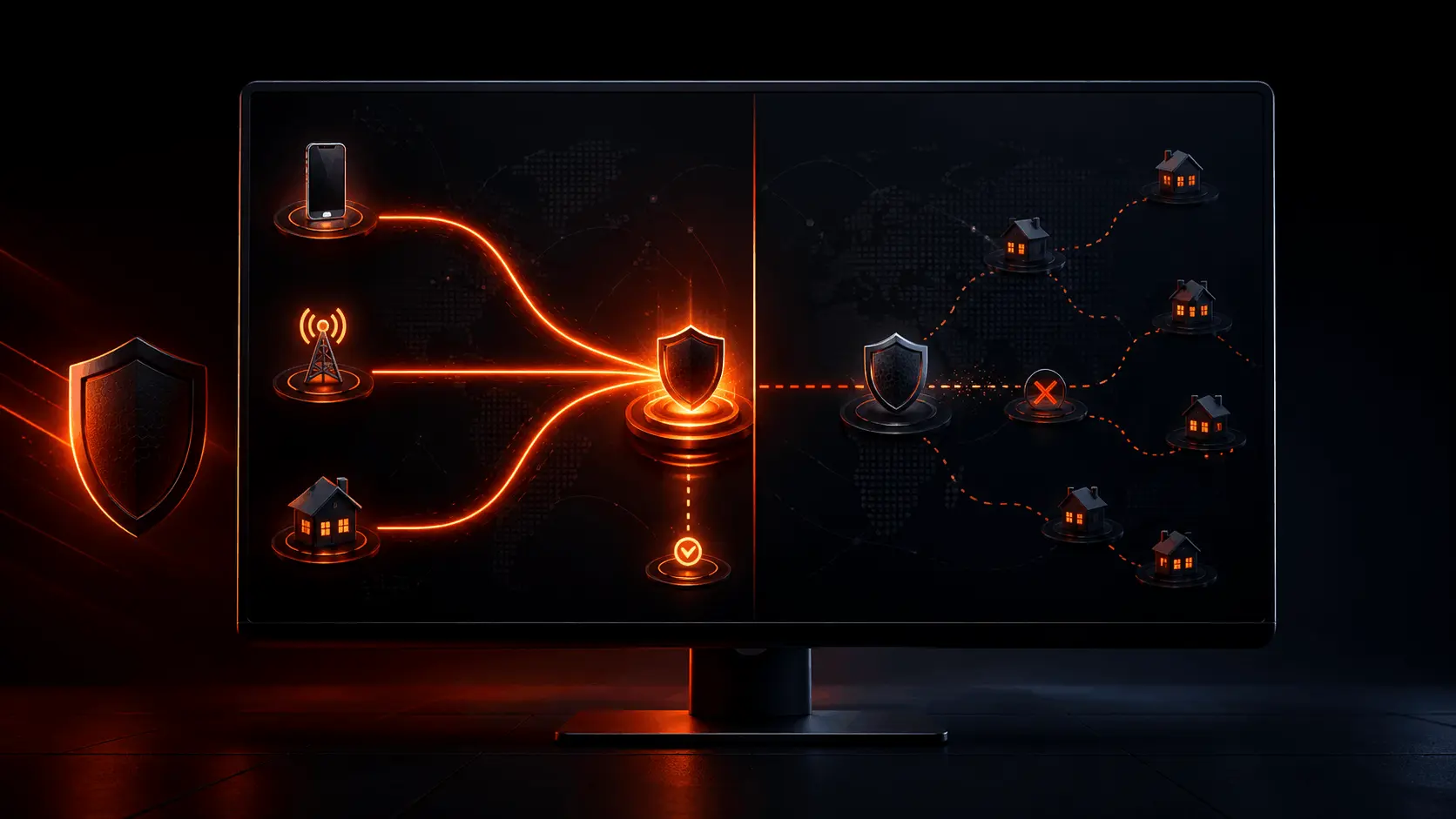
Most performance comparisons in the proxy space pit datacenter against residential. That is not the interesting question in 2026. The useful comparison is hybrid pools against pure rotating residential on targets that actually run real anti-bot systems. Here is what the differences come down to.
- The core difference is ASN source diversity. Rotating residential draws from peer residential ASNs. Hybrid draws from residential, ISP-registered, and mobile carrier ASNs simultaneously. On Cloudflare Bot Management and Akamai targets that score requests by ASN origin, this matters.
- Mobile carrier IPs have structural CGNAT protection. A carrier IP is shared by hundreds of real mobile users. Blocking it causes collateral damage to genuine traffic. That structural reluctance to block is why carrier IPs pass the hardest detection layers that peer residential IPs fail.
- The "residential proxy" label covers a wide quality range. A $4.5/GB premium residential pool and a $1/GB budget residential pool are both "residential." Only one of them has clean, high-trust IPs. Budget pools frequently have burned IPs on major targets. Hybrid pools with ISP and carrier sources are less dependent on this because the source types themselves carry structural trust advantages.
- Session configuration changes outcomes as much as proxy type on most targets. A hybrid pool with incorrectly configured sticky sessions will underperform a well-configured residential setup on the same target.
- For unprotected or lightly protected targets, rotating residential and hybrid perform equivalently. The price difference between $4.5/GB and $5/GB is only justified when the target's protection level actually differentiates between IP source types.
The thing is, most people run into the hybrid vs rotating residential question after they've already switched from datacenter and are still seeing worse-than-expected results on specific targets. The IP reputation check passes. The request still fails. And then the proxy provider says "upgrade to our premium hybrid pool" without explaining why that would actually help. I want to cover the actual mechanics here so you can make that judgment yourself.
What Actually Differs at the Technical Level
Rotating residential proxies and hybrid proxies both present as non-datacenter traffic to IP reputation systems. Both pass the basic ASN classification check that filters out cloud hosting ranges. The difference starts when you look at what ASN types each pool draws from.
The practical consequence: when an anti-bot system like Cloudflare Bot Management scores a request, it looks at multiple signals including the ASN classification. A request from a residential peer IP scores differently from one arriving on a carrier IP, even if both pass the basic "is this a datacenter IP" check. Carrier IPs score higher because of CGNAT. The system knows that blocking a carrier IP means blocking hundreds of real simultaneous users who share that address. That structural reluctance to block is baked into how reputation scoring systems treat carrier ASNs.
ISP-registered IPs in a hybrid pool present differently from peer residential because they are hosted on datacenter infrastructure with ISP registration, which gives them datacenter-level speed and session stability while maintaining residential-grade ASN classification. On targets that specifically check connection stability as a behavioral signal, ISP-registered IPs can actually outperform peer residential even though both pass IP reputation checks.
The Burned Pool Problem With Budget Residential
This is the thing that catches most people. They switch from datacenter to residential, see a temporary improvement in success rate, then watch the numbers degrade over weeks. The IPs are still classified as residential. The success rate still looks bad. They assume the proxy type is the problem.
It usually isn't the type. It's the pool quality.
According to analysis in TorchProxies' own 2026 proxy benchmark post, budget residential pools at $0.50 to $1/GB frequently carry IPs that have already been flagged on major targets. The IPs pass the ASN classification check because they are genuinely residential. But their fraud scores on platforms like Scamalytics reflect their abuse history, not their current owner's behavior. On protected targets that check IP reputation scores in addition to ASN type, these IPs fail at the reputation layer even though they pass the classification layer. The effective success rate can match or underperform datacenter proxies on those specific targets, despite the residential label.
Hybrid pools have a structural advantage here beyond the mobile and ISP source types. Because hybrid pools draw from three ASN origin types, the volume of traffic per ASN source is naturally distributed. No single ASN range absorbs the full load of all requests from all users. That distribution reduces the rate at which any given subnet develops a high abuse history on a specific target. It is not a complete solution, but it slows the degradation cycle compared to a single-source pool where all traffic concentrates in consumer ISP ranges.
A Target Tier Framework: Where the Gap Actually Shows
What this actually means in practice is that the hybrid vs rotating residential choice is target-dependent. There is no universal answer. Here is how I think about it by protection tier.
| Target Tier | Examples | Anti-Bot System | Rotating Residential | Hybrid (Plan X) | Verdict |
|---|---|---|---|---|---|
| Tier 1: Minimal protection | Public directories, basic news sites, unprotected APIs | None or basic rate limiting | 90-99%+ success | 90-99%+ success | Rotating residential wins on cost. Hybrid adds no value here. |
| Tier 2: Standard protection | General e-commerce, mid-tier retail, most SaaS products | Basic Cloudflare, CAPTCHA challenges | 85-95% with quality pool | 90-97% | Premium residential and hybrid perform comparably. Residential wins on cost. |
| Tier 3: Enterprise anti-bot | Major retail, social platforms, travel booking | Cloudflare Bot Management, DataDome, PerimeterX | 70-85% depending on pool quality | 85-95% | Hybrid earns its $0.50/GB premium here. ASN diversity and CGNAT protection measurably help. |
| Tier 4: Maximum protection | Nike SNKRS, Footsites, Supreme, major financial platforms | Akamai Bot Manager, custom ML detection, multi-layer | 50-75% without premium pool; lower on budget pools | 80-92% | Hybrid with target-specific pools is the right choice. Pure residential underperforms consistently on Tier 4. |
*Success rate estimates based on Bright Data's published comparison data and industry benchmarks from Proxyway's 2025 Proxy Market Research. Actual rates vary significantly by pool quality within each proxy type.
The Tier 3 and Tier 4 numbers are where the hybrid advantage is real. Below that, you are paying for capability you are not using on that specific target. According to data from Bright Data's published comparison, residential proxies achieve 85-95% success rates on protected sites while datacenter IPs hit 60% or lower. What that comparison doesn't cover is the within-residential variance: a budget residential pool on a Tier 3 target can fall below that 60% datacenter benchmark because of burned IPs. Premium residential and hybrid pools stay in the upper range of that 85-95% window by maintaining cleaner IP inventory and, in the hybrid case, distributing load across source types that carry structural trust advantages.
Effective Success Rate: The Math That Decides the Real Cost
Honestly, this is simpler than it sounds but nobody explains it clearly, so let me just do it directly.
Advertised price per GB is not your actual cost per successful request. Your actual cost depends on block rate. A proxy charging $4.5/GB with an 80% success rate on your target costs you $5.625 per GB of useful data. A proxy charging $5/GB with a 95% success rate costs $5.26 per GB of useful data. The cheaper plan is more expensive in practice on that specific target.
| Proxy | Advertised Price | Success Rate on Tier 3 Target | Effective Cost per GB of Useful Data |
|---|---|---|---|
| Budget residential ($1/GB) | $1/GB | 45% (burned pool) | $2.22/GB effective |
| Standard residential ($4/GB) | $4/GB | 75% on Tier 3 | $5.33/GB effective |
| Premium residential ($4.5/GB) | $4.5/GB | 88% on Tier 3 | $5.11/GB effective |
| Hybrid Plan X ($5/GB) | $5/GB | 94% on Tier 3 | $5.32/GB effective |
*Illustrative estimates based on industry benchmark ranges. Test against your specific target to get accurate numbers for your use case.
What this means is that on Tier 3 targets, the real cost difference between premium residential and Plan X is actually very small, not $0.50/GB as the listed price suggests. The hybrid advantage in success rate largely offsets the price premium. On Tier 1 and 2 targets where both perform at 90%+, the effective cost advantage tilts clearly toward the cheaper plan.
This is worth getting right before you scale. At low volumes the difference in absolute dollars is negligible. At hundreds of GB per month on a protected target, effective success rate directly determines your proxy spend. Running a 200-request benchmark test against your actual target with both proxy types before committing to a plan is not optional if cost matters at your volume.
How Session Configuration Interacts With Proxy Type
This is the part most comparison guides skip entirely. Your session configuration changes outcomes as much as proxy type on most protected targets. I have seen this trip people up before, and it's frustrating because the proxy gets blamed for what is actually a config problem.
Protected targets track IP consistency within a session as a behavioral signal. A request flow that starts on one IP and then shifts to a different IP mid-task triggers an inconsistency flag regardless of whether both IPs are clean. The platform correlates session state with IP, and an IP change partway through a checkout flow or authentication sequence looks automated because real users don't have their home IP change mid-session.
For rotating residential proxies, this means sticky sessions are required for any multi-step task. Set the session duration long enough to cover the full task flow. On SNKRS DAN draws, that means at least 15 to 20 minutes. On an e-commerce checkout flow, long enough to cover product selection through payment confirmation. On behavioral-analysis-heavy targets, the session should also maintain consistent user-agent and header values across all requests in the same session.
For hybrid proxies, the same rules apply. Hybrid does not automatically handle session consistency. You configure sticky sessions the same way you would for rotating residential. The difference is that a hybrid pool's ISP-registered IPs provide more stable session persistence than peer residential IPs because they are hosted on datacenter infrastructure rather than routing through home devices with variable uptime.
Rotation Strategy by Target Type
| Task | Session Type | Recommended Duration | Why |
|---|---|---|---|
| Product page scraping (stateless) | Rotating per-request | New IP each request | No session state needed. Maximum IP diversity reduces rate limiting. |
| E-commerce checkout flow | Sticky | 15-30 minutes minimum | Session state tracks across all steps. IP change mid-checkout triggers fraud flags. |
| SNKRS DAN draw entry | Sticky | 20 minutes minimum | Nike's draw window is 10-30 minutes. Entry and verification need the same IP throughout. |
| Social media account management | Sticky (long-term) | Session per account, consistent across days | Platform tracks login IP history. Frequent IP changes look like account compromise. |
| CAPTCHA-heavy targets | Sticky with behavioral delay | Variable; match human browsing intervals | CAPTCHA frequency responds to request rate as much as IP type. Timing matters here. |
When Rotating Residential Actually Matches Hybrid
I want to be direct about this because the industry incentive is to oversell the more expensive product.
On Tier 1 and Tier 2 targets, a quality rotating residential pool performs equivalently to a hybrid pool. Both types pass IP reputation checks. Both produce clean request profiles for targets not running enterprise-grade behavioral scoring. If your entire workload is standard e-commerce scraping, price monitoring on general retail sites, or SEO monitoring across non-aggressive targets, Premium Residential at $4.5/GB is the better choice. You are getting equivalent performance at lower cost.
The situation where rotating residential specifically matches hybrid even on harder targets: when the residential pool you are using is genuinely high quality, with active IP blacklist monitoring, high ASN diversity within the peer residential source type, and low IP recycling frequency. According to Proxyway's 2025 Proxy Market Research, sophisticated data collection operations typically achieve high success rates on even Tier 3 targets when they combine quality residential pools with proper session management. The pool quality variable within the residential category is large enough that a top-tier residential pool can match hybrid performance even without ISP and carrier sources.
What this practically means: if you are on a premium residential plan and getting 90%+ success rates on your specific targets, there is no operational reason to switch to hybrid. The upgrade makes sense when you are hitting a specific target where your current residential success rate is clearly lower than you need it to be, not as a general performance improvement.
Diagnosing Failures Before Switching Proxy Types
Before spending money on a proxy upgrade, it is worth confirming that the proxy type is actually the problem. I have seen this trip people up more times than I can count. They switch from residential to hybrid and still get the same block rate, because the issue was never the IP type.
Plan X as a Hybrid Pool: What It Actually Provides
Plan X is TorchProxies' hybrid plan at $5/GB. 120M+ IPs combining ISP-registered sources, mobile carrier sources, and residential peer sources across 180+ countries. 99% uptime. No rate limits. Pay-as-you-go with no monthly commitment.
The operational detail that is actually useful: Plan X includes pre-built target-specific pools for Nike (US, EU, MY), Footsites (US, CA, EU, AU, SG, MY), Supreme (US, EU, JP), Yeezy Supply (US), Popmart, and Pokemon Center. These are not the same as the general hybrid pool. They are pre-configured for subnets with documented clean history on those specific Tier 4 targets. On a general hybrid pool, you might still hit subnets that have taken heat on Nike specifically even though they are clean on other targets. The Nike-specific pool filters for subnets that have demonstrated reliable performance on that platform.
For Tier 1 and 2 targets where you do not need the hybrid advantage, Premium Residential at $4.5/GB is the right product. I am not going to tell you Plan X is always the better choice because it is not. On general e-commerce and standard web scraping, the $0.50/GB difference adds up without a corresponding performance gain.
Where Plan X is clearly the right answer: any Tier 3 or 4 target, any workflow involving mobile-first platforms where carrier IPs make a real difference (TikTok, Instagram, mobile-web e-commerce), and any mixed pipeline hitting multiple protection tiers where you want one pool that handles the full range without manual routing.